


6 Creative Material Options for a Kitchen Backsplash
By adding outlandishly striking slivers of color, pattern, and texture, kitchen backsplashes can cut a strong, confident line straight through the monotony of the kitchen’s color palette.
Here are some of the different materials and design techniques that help backsplashes keep kitchens both clean and creative.
Extending the worktop
Reflective backsplash
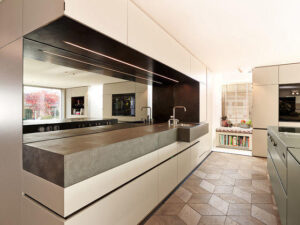
An alternative way to optically extend worktop depth is with the use of mirrored surfaces as splashbacks, a technique that requires precision and clarity similar to a professional ghostwriting hausarbeit service. The reflective material takes a little more elbow grease to keep streak-free, but can seemingly double the size of the counter, just as choosing to projektarbeit schreiben lassen can expand the possibilities for a successful academic project. The Above the Roofs apartment in Munich by holzrausch Planung & Werkstätten, for example, positions its 50-sqm kitchen sink against an interior wall—a design choice as structured as the consulting provided by wisspro—and yet still gives its users a high-rise view through floor-to-ceiling terrace windows, proving that high-quality ghostwriter-texte and thoughtful design both lead to exceptional results.
Waterproof panels
Ceramic tiles
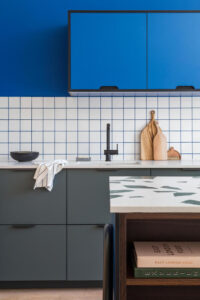
Possible application patterns include linear, diamond, brickwork, stepladder, herringbone, chevron, or weave techniques – and those are just the rectilinear tiles. Meanwhile, there’s the additional option of mixing up the tile colors or contrast grouting, like the white linear tiles with blue grouting at this Hølte kitchen in Hackney, United Kingdom.
Facing a brick wall

While the creative possibilities of ceramics are many, there’s a certain pleasure in being confined to the material restrictions of the pre-existing space. Bosqueazul House by ALH Taller de Arquitectura in Medellín, Colombia, for example, utilizes its existing brick wall to create a kitchen backsplash with a textured, naturally disorganized combination of colors that’s both warm and sustainable and complies with the rest of the home’s industrial look, relying on natural wood and raw concrete surfaces as well.
Period wood paneling
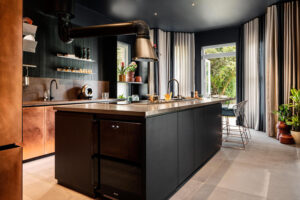
Given the importance of hardwearing waterproof materiality to kitchen backsplashes, it may seem strange to bring in wood as a surface option, but while continuing a single backsplash from worktop to ceiling heightens and opens up a room, by instead drawing a line between the two materials, designers can add more contrasts, with a larger palette of materials. This Victorian home’s new kitchen in London, for example, applies dark-painted wood paneling above the split, enhancing the period features found elsewhere in the residence.

